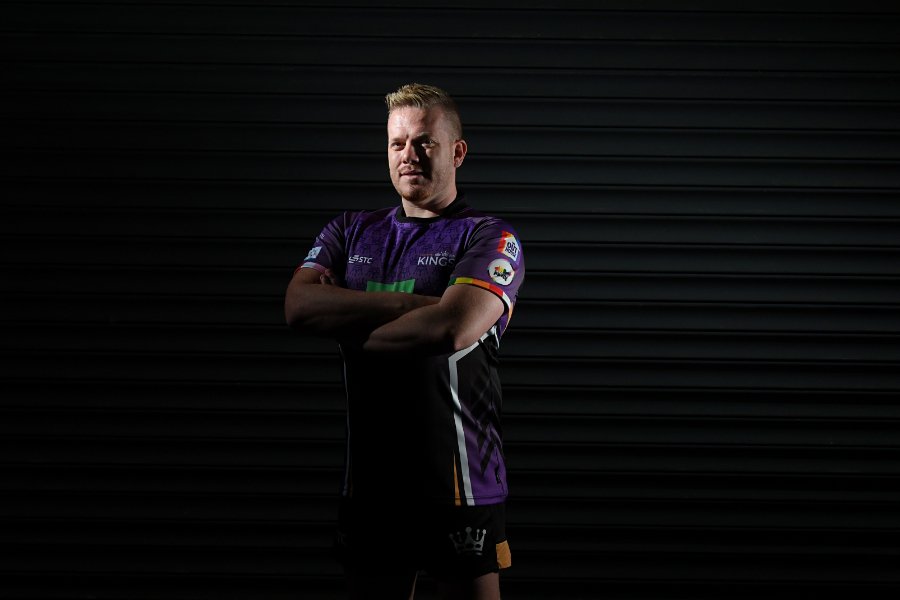
The sport of Kings
“Ultimately, we want everyone to be able to access sport and to have the chance to play against people that they feel are like them.”
Interview: Sue Wilcock | Martine Silkstone
Pictures: Warren Page
Sam Biscoe talks to Essex Director
Not all positive change in this world is driven by righteous, rebellious disruptors – sometimes it is created by a single person just trying to do something wonderful.
When Sam Biscoe created the LGBTQ+ rugby team, Colchester Kings RFC, he was simply trying to provide a safe space for anyone who wanted to play, no matter what their age, sexuality, or skill level; a space where everyone could feel comfortable and accepted for who they are, while enjoying a chance to train and play the game.
Two and a half years on, the Colchester club has more than 60 members and it is still growing, with the recent addition of a touch team and plans for further expansion in the works. Their ethos: to offer a warm welcome to nervous players and to be adaptive to those that may not have got on in traditional settings.
“Basically, every person that joins the team had always wanted to get involved in the sport but generally found it was not quite representative of who they are – I wanted to change that,” Sam explains.
“Rugby is inclusive by its nature. The players are all different shapes and sizes, and each one has a slightly different job to do. It means there is a spot for everybody no matter what their identity looks like. That includes allies – some of our members don’t identify as LGBTQ+ but love the atmosphere and passion that our team has.”
“I’m proud to say that we truly represent a community of people.”
Within that community, Sam says that the rugby is often secondary to the network of friendship that has been found within the team. He has created a “family” that supports each other and offers a hug when needed and that can be a powerful thing.
But, make no mistake, they are still very competitive within their sport.
The team came second in the International Gay Rugby (IGR) UK league last year and scored the most points by any team in the country, with one of their players scoring the most tries throughout the entire season.
Success on both fronts. So, how does it feel?
“Kings is definitely my greatest achievement. It started out as a hobby but now it’s so much more than that. I was stood watching last night at training, and we had the two teams on the pitch with everybody split off into their different groups – I just thought, this is so cool.
“All of these people come here every Monday and they do something that they hadn’t previously thought about doing because they didn’t have the opportunity. Now this space exists, and while I set it up, it exists because they keep coming. I don’t force people to turn up every week; I don’t force people to make friends with each other – they’re doing that by themselves. It’s quite magical really.”
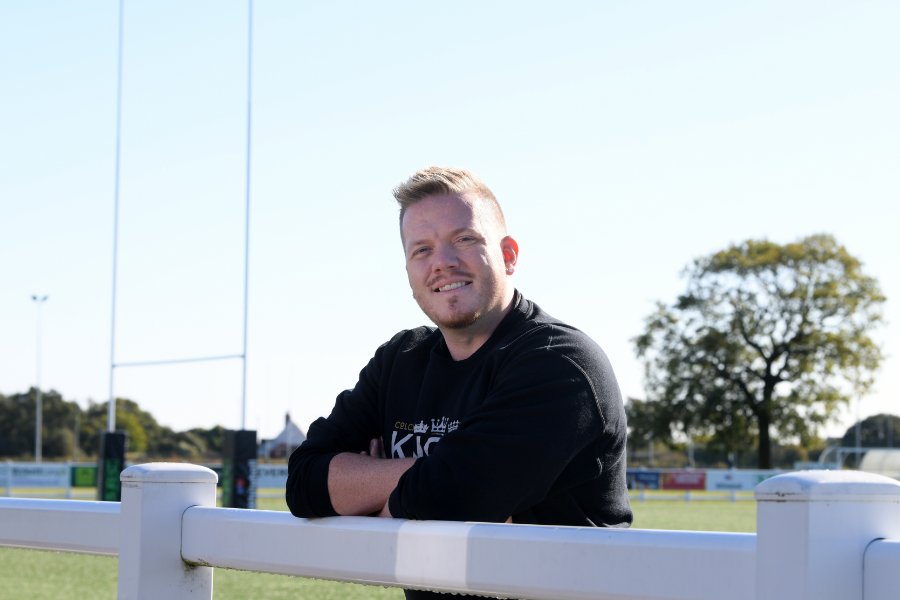
Where it all began
Sam was born at Ipswich Hospital in July 1986.
Growing up, he lived with his parents and older sister, Laura (who later went on to become a welder, running her own business restoring classic vehicles – disruptors run in the family it seems).
He enjoyed a happy home life, but when it came to school, young Sam did not have an easy time. As a “quiet and shy kid who was clearly a bit different to the others”, he says he experienced verbal bullying throughout his school years and hated his time there, especially PE lessons.
Fortunately, he found his “safe place” at dance classes.
At the age of six, his mum took a neighbour’s daughter to her ballet class and Sam went along to watch. While there, he got up and joined in and found he loved it. Encouraged by the teacher, he returned the next week and later joined the Linda Shipton School of Dance in Ipswich, starting with ballet and then going on to study tap, jazz, and modern styles.
“Dance took up almost all of my spare time as a kid,” he remembers. “I think those classes, without me realising it, had become my place to go and just be around people who accepted me for who I was – even if I didn’t realise that I was gay until I was a teenager.”
Despite his split focus and troubled education, Sam went on to achieve good grades in his GCSEs and his plan was to attend college and do a business course, with a view to opening his own coffee shop.
His dance teacher, Coral Stebbings, had other ideas.
“She said I would be wasting my talents and had me change to the Performing Arts course. That was followed by further professional training when I was 18, but I still didn’t find the class environment easy and I wanted to quit a few times.
“It’s a funny thing. I would say that I’m an introverted extrovert – I will get up and make an idiot of myself on stage but I don’t find it easy to fit in with big groups of people and make conversation.”
Nevertheless, he graduated in 2007 and, having attended an open audition in London, he quickly secured an exciting contract to work, quite literally, overseas.
Bon voyage
Sam’s first job was as a dancer on Carnival Cruise Lines, and he travelled to lots of different places including Florida, Charleston, San Diego (his favourite), Boston, and all down the east coast of America.
“It’s a really interesting lifestyle,” he reflects.
“There’s a lot of rules but, being a bit of a nerd, I quite like that – having things in their place – so it suited me perfectly.”
“I never really got homesick and rarely got seasick [green apples and ginger beer are the key apparently], and I made some good friends among the other crew members.
“Overall, it was a wonderful experience and, because of my role in entertainment, I ended up having lots of customer service training and that has helped in all my roles since then.
“The only downside was being away from family. Well, that and not having decent access to the internet,” he smiles.
Sam enjoyed life on board ship for eight years, exploring a variety of US ports and earning good money; performing in shows and occasionally being asked for autographs by admiring passengers.
He had just been offered a prestigious new contract cruising from Singapore to Australia, when suddenly, in the middle of rehearsals, his cruise life came to an end and he flew back to the UK.
He had received some devastating news from home.
Coming home
It was 2015 and Sam’s father, Jon, had been diagnosed with leukaemia.
“I got a Skype call from my parents,” Sam recalls. “They told me that he had cancer, that he was having treatment, and that I was to not go home. They knew that the contract meant a lot to me, and that it was going to be an unforgettable lifetime experience.
“So, of course, I got on the next flight home.”
Fortunately, six months after he got back, Jon had a ‘good’ match for a stem cell transplant through the Anthony Nolan Trust and responded well to the treatment – nine years later, he is still in recovery.
Back then, with his dad getting better but the cruise work gone, Sam started to think about his next steps.
“I was really grateful to be able to be there to support my family, and those months also gave me an opportunity to go: right, what do I want for my future?”
“A lot of dancers don’t get to make the decision for themselves – they either just stop getting work or they get injured. I might have had another five years but that would have been it, so it was already the beginning of the end for me and time to find something else.”
He started to apply for a variety of jobs across different sectors – call centre operator, account manager – anything ‘people’ orientated. Meanwhile, he worked briefly at DanceEast and filled in at the New Wolsey, some days as duty manager or administrator, and other days scrubbing the patio.
After about a year, he decided to speak to a careers adviser who suggested a focus on theatre jobs alone – obvious in hindsight, Sam says. He realised that he really liked being front of house where he could help customers, so narrowed it down further and began applying for any roles that came up for the box office.
He soon found his new home on the south coast.
Time to play
In 2016, Sam left home again to start work as box office manager at the Nuffield Theatre in Southampton.
It was here, while representing the venue at Southampton Pride, that he first discovered the city’s gay rugby team, the Wessex Wyverns, and despite thinking it was “a bit weird” he was eventually persuaded to give it a try.

“A friend introduced me to a couple of people that played for the Wyverns. They invited me to play and I said, absolutely not; I don’t do running into people. Then after about six months of them harassing me to come to training, I thought: you know what? I’m going to come and prove to you how much I hate this.”
Sam went to his first training session in January 2017 and it was cold, dark, and raining sideways. Frozen to the bone, he says he couldn’t tell if he was actually having fun, so decided to go back again just to check that he really hated it.
A few training sessions later, he realised that he had actually made some good friends through rugby – even if he still didn’t understand the game itself.
“I didn’t really know what was going on,” he laughs. “I knew I was supposed to run forwards and pass the ball backwards, but other than that, I had no idea. Then I spoke to a big guy in the team who just charged through people and scored tries all the time. He said ‘I haven’t got a clue what the rules are. I just grab hold of the ball and run’. That was my eureka moment – that nobody really knows what the hell is going on and you’re all just running around in complete chaos!”
“That’s one of the things that I say to our new players now: if it feels chaotic and you don’t understand what’s going on, don’t worry. You aren’t going to understand what’s going on just yet but if you keep coming, you will do. Things start to fall into place as you go along.”
Moving on
In 2019, Sam left Southampton for a job at Newbury Corn Exchange. However, the new role was short-lived and, after the breakdown of a relationship, he soon moved on again, this time to work for a group of theatres based in Peterborough, first as ticketing operations manager then later as head of audiences.
Though he loved the people and the organisation, coming through Covid was hard and being away from family was proving difficult.
Then the ideal opportunity presented itself.
He explains: “I’d known Carol at the Colchester Mercury for a very long time and she invited me to come and look at their new building. While I was there, she mentioned that they were about to start recruiting for this role and though I hadn’t been looking, it was perfect timing.”
Sam moved to Colchester and started as the theatre’s head of marketing and communications in 2022. It felt good to be back near family again and, though concerned about his lack of qualifications, he was absolutely focused on the new job and determined to get it right.
When it came to management, he learned a lot from the previous person in terms of planning and running a department: “She gave me a particularly useful analogy about bomb sizes and length of string – is the issue a big bomb with a short fuse, or is it a little bomb with a long fuse, and which one of these do you need to put out first. It’s something I still use in everyday life.”
Calling on all his previous experience and with the support of a “marvellous team”, he soon found his feet and proceeded to make strategic changes to the theatre’s marketing approach, most importantly reallocating funds where they could have a real impact.
The efficiency savings made a real difference but still there was a lack of resources and funding was tight. Over time, Sam grew frustrated with the limitations and while he didn’t want to leave, it ultimately felt like the right thing to do.
He says: “I got to the point where I’d just had enough of working for a non-profit; of not having the budget and not having the staff.”
“I had thought I might like to run a venue one day – not anymore!”
Today, Sam works as marketing and partnerships manager for Secure My Booking, providing ticket refund protection for theatre and culture venues in case customers can’t attend because of illness or travel delay etc.
“My boss, Peter, was trying to get me to come and work with him for a while but I didn’t think insurance was very sexy. Then, after spending three months at a marketing agency, I decided, do you know what, insurance is really sexy,” he laughs.
But he hasn’t left theatres completely.
He recently joined the board of Eastern Angles and is excited to use his expertise to guide and support a theatre company that focuses on communities that may not otherwise engage in the arts.
It is an ethos that connects neatly with that of Kings.
A place for all
Now based in Essex, Sam rediscovered his passion for rugby through watching his cousin’s partner, Alex, play for Colchester Rugby Club. In fact, it was Alex who first suggested that he set up an inclusive team for the city, then introduced him to Maggie Whiteman – the Club’s President at the time – who agreed it was a great idea.
“I quickly realised you don’t say no to Maggie,” he smiles.
So, after a brief social media campaign to boost interest and ultimately disrupt common perceptions of the sport, Colchester Kings RFC was born.
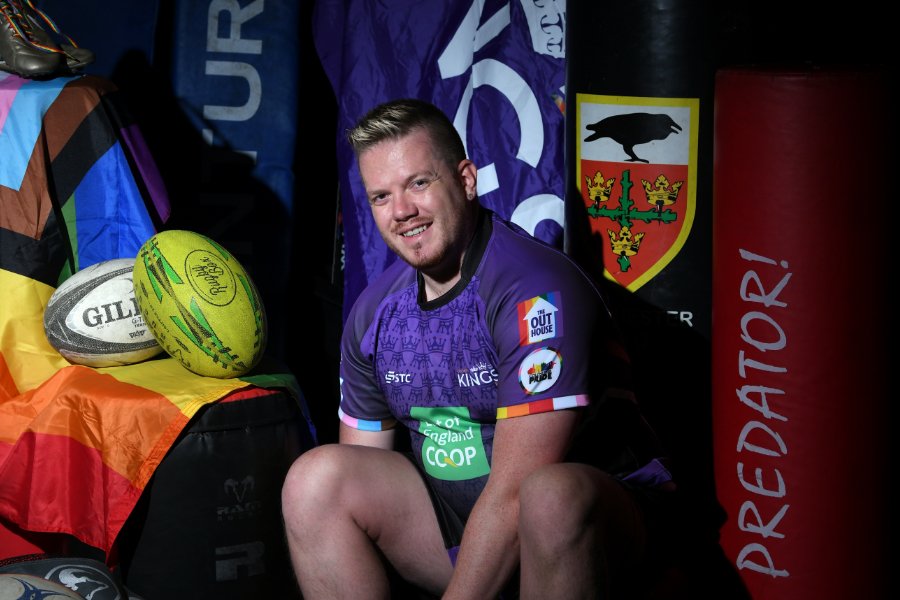
The new club held its first taster session for around 30 people on June 1, 2022.
By the end of the summer (with a boost from Colchester Pride), more than 70 people were turning up to play and Anglia TV had been to film their training.
“I hadn’t imagined that it would grow so quickly,” Sam admits. “I just assumed that we’d get a handful of people turn up and we might pass a ball around for an hour. I thought there would be more time to plan and consider how we were going to do things and the types of games we would play.”
As it was, he had to move quickly.
With the club fast becoming popular, his biggest challenge was putting in place the necessary processes and policies, while forming a committee of people who would be instrumental in keeping the team on the right path. There were fees to consider and bank accounts, and that meant putting together a constitution. It was a steep learning curve.
Sam says: “There’s no manual for these things. Fortunately, Simon, who runs the Northampton Outlaws, reached out to me when he saw what I was trying to do and offered his advice on setting it all up in the right way. The people at Colchester Rugby Club were also great and helped out with equipment and rent initially, and I found some templates online for codes of conduct and privacy polices etc.
“It took a while but we got there.”
Kings is now two years old and already competing in the league for the second time after coming back with a trophy from the IGR World Cup, held in Rome, earlier in the year.
So far, so successful.
So, what’s next?
“The make-up of the team will be slightly different this year, so we might not perform on the same level, but actually it’s more about people coming along and having a good time.”
“We want people to enjoy the rugby, and if they’re enjoying it, they’ll come back”.
“We’ve just started a touch rugby team as well – Colchester Thunder – for people that don’t want to do the full contact sport, which means that we can be fully inclusive of all gender identities and all sexualities. Hopefully that will continue to grow and we have talked about having a first and a second team, and perhaps even a youth team at some point. Eventually, it would be great to have an Inclusive Sport Colchester brand for all sorts of different sports, games, and social activities.
“It’s just having the time to do it and getting the right funding support in place. We’d like to be able to offer more bursaries and free spaces, and for the club to pay for transport and match fees, so all players can join in no matter what their circumstances.
“Ultimately, we want everyone to be able to access sport and to have the chance to play against people that they feel are like them – but that takes time and money.
“Hopefully the business leaders who see this will think, yeah, we would love to help you with that,” he grins.