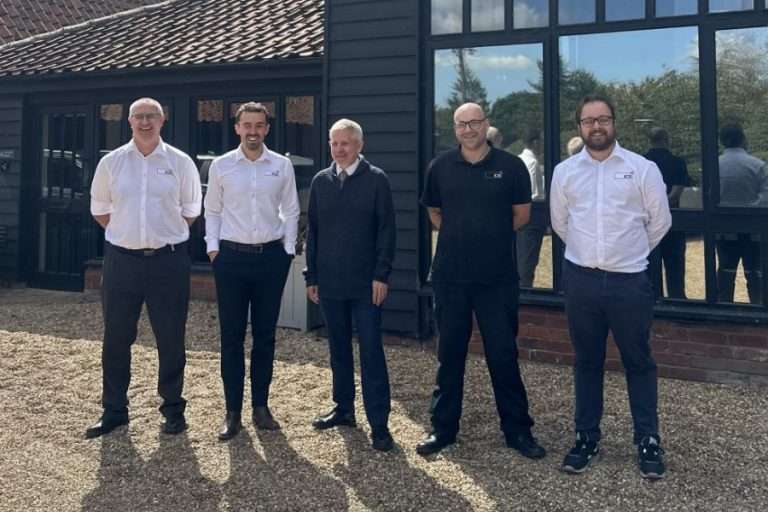

Financial Planning: Colin Low, Kingsfleet
Trust is the cornerstone of all relationships – personal, professional or commercial. Without it, agreements collapse, partnerships fail and opportunities vanish. Yet despite its importance, trust is not easily won, nor is it guaranteed by position or authority. It must be carefully cultivated, consistently demonstrated and continuously reinforced.
Qualifications as the framework
At the most human level, trust is earned through integrity and consistency. People look not only at what we say but, crucially, at what we do. Do our actions align with our promises? Do we act fairly, even when it may not serve our immediate interest? Over time, repeated alignment between word and deed creates reliability – and reliability is the foundation of trust.
For professionals, trust involves an additional layer: competence. Clients and stakeholders seek assurance that advice is grounded in expertise. This is where qualifications, accreditations and professional standards play a vital role. They are visible proof that an individual has attained a level of knowledge, been tested against industry benchmarks and is committed to ongoing development.
At Kingsfleet, we believe these external standards matter. Our status as chartered financial planners demonstrates a commitment to the highest level of professional excellence in financial planning. Meanwhile, our certification as a B Corporation reflects accountability to a broader set of values – using business as a force for good, balancing profit with purpose and ensuring that the communities and clients we serve can depend on our integrity. These are not marketing badges; they are frameworks that hold us to account, reinforcing trust through transparency and independent verification.
Trust in action
Still, qualifications and accreditations provide only the framework for trust, not its substance. A certificate on the wall may open the door, but how a business engages with people determines whether that door stays open. Listening attentively, showing empathy and being transparent about risks as well as opportunities are the behaviours that make trust meaningful in practice.
Trust also flows from accountability. When professionals adhere to codes of conduct and submit to external oversight, they demonstrate that their work is not only self-policed, but also subject to higher standards. This builds confidence that errors will be addressed, complaints heard and redress available if things go wrong. Accountability, in this sense, is the safety net beneath the relationship.
In business, as in life, trust is never static. It is dynamic – renewed or eroded by every interaction. The paradox of trust is that it takes years to build, moments to lose and, often, forever to restore.
Ultimately, the most trusted individuals and organisations combine credibility with humanity: expertise with humility, qualification with care and authority with authenticity. When these elements align, trust becomes more than a professional asset – it becomes a legacy.
Kingsfleet is a trading name of Kingsfleet Wealth Ltd which is authorised and regulated by the Financial Conduct Authority. Company No. 07051136. FCA Registration No. 514731.

GET IN TOUCH
Colin Low is Founder and Managing Director at Kingsfleet
T: 01473 744724
E: advice@kingsfleetwealth.co.uk
Or visit www.kingsfleetwealth.co.uk