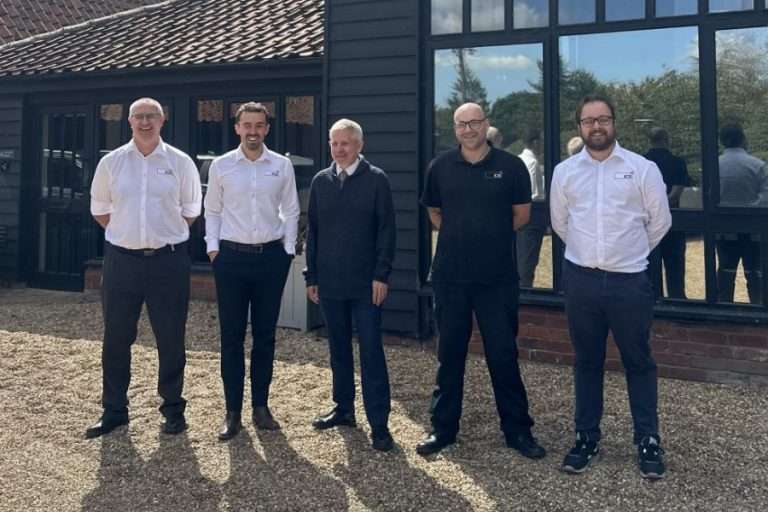
Helping You To Reach Your Goals: Sally Farrow, Larking Gowen
Every business leader talks about trust. Fewer stop to ask what it actually means or understand how easily it can be lost.
In a world where clients can compare services in seconds, where employees expect transparency and where reputation spreads faster than strategy, trust has become one of the hardest-won advantages in business. It doesn’t appear in a balance sheet, yet it shapes everything from employee retention to long-term profitability.
Clients, culture and community
Trust isn’t built by clever branding or short-term promises. It grows through consistency, doing what you say you’ll do, communicating clearly and showing reliability in good times and bad. It’s reinforced through accountability and genuine care, not marketing slogans.
When leaders model those behaviours, it ripples through their teams and out to clients and communities.
Across East Anglia, many independent firms still trade on this principle. Their strength lies in deep relationships, local knowledge and personal accountability. These are qualities that can’t easily be replicated by scale or investment alone.
At Larking Gowen, we’ve seen firsthand how trust shapes outcomes. As an independently owned firm, much of our growth has come from long-standing relationships with clients, with our people and with the wider business community. Whether advising a family business through succession or supporting a charity initiative, the same principle applies – trust turns transactions into partnerships.
That extends to how we engage with the region we’re part of. Supporting community projects and local organisations isn’t a marketing exercise; it’s an investment in the networks and confidence that keep local economies strong.
When business leaders contribute time, skills or sponsorship to regional causes, they strengthen both their brand and their community’s resilience.
Inside and out
Trust also thrives internally. When employees feel respected, empowered and listened to, they deliver better outcomes for clients. A culture built on openness and shared purpose isn’t just good ethics, it’s good business.
Our own strategy places people, relationships and community at its core, because they’re the conditions that sustain trust. Whatever your sector, that balance remains universal – value your people, nurture relationships and stay connected to the place you do business.
Trust isn’t sentimental, it’s pragmatic and measurable in the loyalty it earns and the stability it creates. In the end, it’s not just the right thing to build, it’s the most strategic.

GET IN TOUCH
Sally Farrow is Private Client, Trusts & Probate partner at Larking Gowen
T: 01603 624181
E: enquiry@larking-gowen.co.uk
Or visit www.larking-gowen.co.uk